
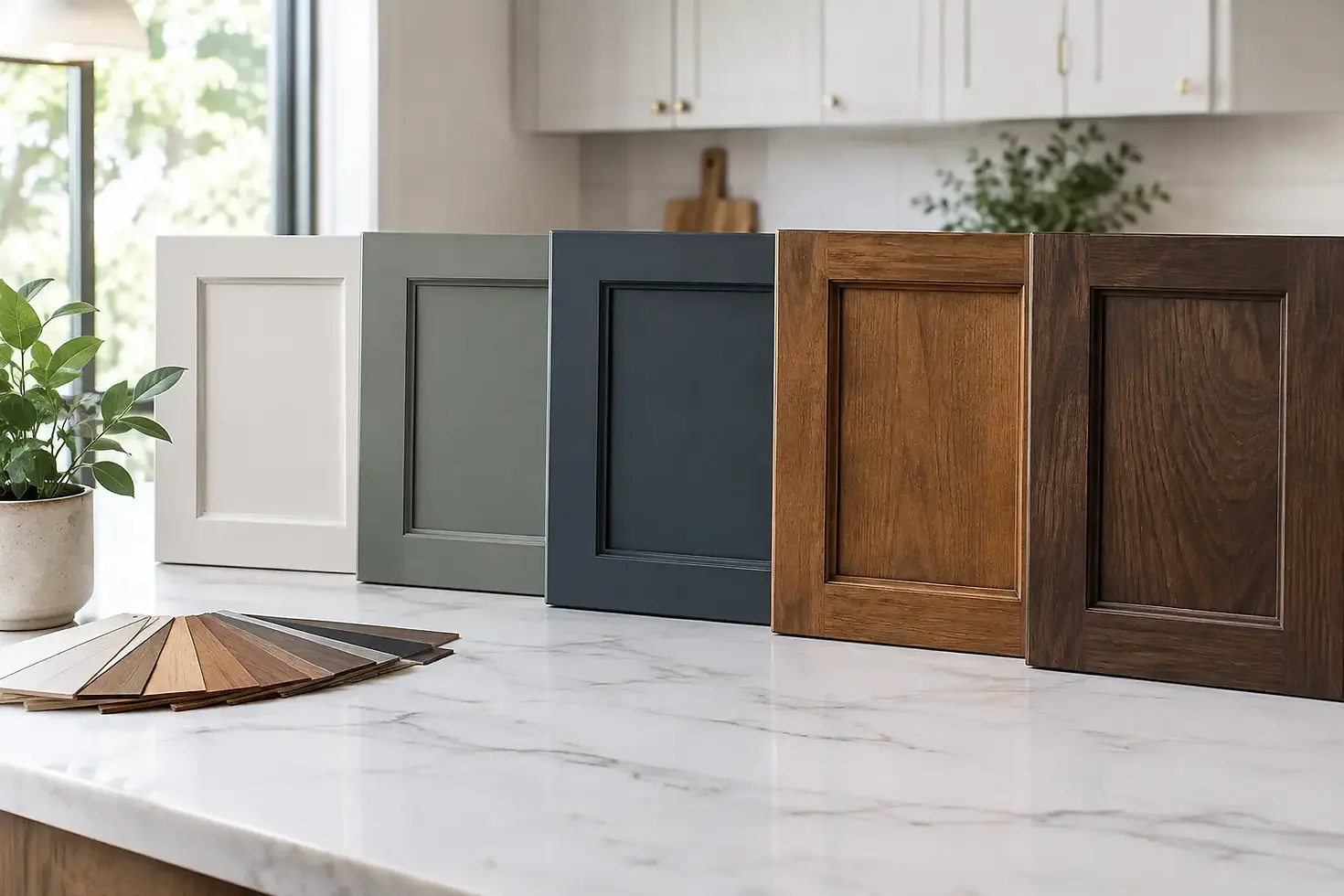
Painted and Stained Cabinet Finishes That Work

A cabinet finish can make the same kitchen layout feel crisp and contemporary, warm and established, or unexpectedly dark. For homeowners comparing painted and stained cabinet finishes, the right choice is not simply a matter of following a trend. It comes down to the wood species, door profile, natural light, daily use, and the look you want to live with for years.
In Phoenix-area homes, bright sun and open floor plans can make these decisions even more noticeable. A finish that looks balanced in a showroom may appear warmer, cooler, lighter, or more reflective once it is installed beside your flooring, countertops, and windows. Starting with a clear finish strategy helps the whole project move forward with fewer surprises.
Painted vs. stained cabinet finishes: the real difference
Painted cabinets cover the wood surface with an opaque color. Depending on the door construction and paint system, you may see very little wood grain or a slight texture beneath the finish. White, soft gray, greige, navy, sage, and charcoal are common choices because paint gives homeowners broad control over color.
Stained cabinets use a transparent or semi-transparent color treatment that lets the grain show through. The stain can make wood look lighter, richer, grayer, warmer, or deeper, but it does not hide the character of the material. Oak grain remains oak grain. Alder knots and variation remain part of the story.
Neither finish is automatically better. Painted cabinets are often the stronger choice when you want a clean color statement, a tailored transitional look, or a way to brighten a kitchen with limited natural light. Stained cabinets are a natural fit for homeowners who value material character, prefer warmth over a uniform surface, or want a finish that connects with wood floors, beams, or furniture.
Choose the finish after the layout, not before it
Cabinet color is exciting, but it should follow the practical decisions that make a kitchen work. Before settling on a painted white or a medium-stained oak, confirm the room layout, storage needs, appliance locations, and cabinet heights. A 3D kitchen design is especially useful here because finish choices change how visual weight moves through the room.
For example, a kitchen with a large island, tall pantry cabinets, and upper cabinets on multiple walls has a lot of cabinetry in view. A deep espresso stain or dark painted finish can look dramatic, but it may feel heavy if the counters, floors, and backsplash are also dark. In that same layout, a light perimeter with a painted or stained island can create contrast without making the room feel divided.
Smaller kitchens need a different approach. Light painted finishes can help cabinets visually recede and make a compact room feel more open. That does not mean every small kitchen needs white cabinets. A light natural stain on a simple slab or shaker door can bring warmth while maintaining an airy look.
How wood species affects stained cabinets
Stain is not a color swatch applied to an invisible surface. The wood beneath it has a major effect on the result. This is one reason samples matter.
Oak has a prominent grain that stays visible through almost any stain. It works well when texture is part of the intended design, including natural, rustic, modern organic, and updated traditional kitchens. Maple has a tighter, smoother grain and often gives stains a more restrained appearance, although it can absorb color differently from one area to another. Alder is softer and can have knots and natural variation, which suits homeowners looking for a more casual, character-rich finish.
If you want a highly consistent brown, gray, or black cabinet surface, paint may be more predictable than stain. If you want the cabinets to look like real wood rather than a flat color, choose stain and embrace the variation. Trying to force wood grain into perfect uniformity usually leads to disappointment.
Why samples should be viewed in your home
Showroom lighting is designed to help you see products clearly. Your home has its own lighting conditions, especially in Arizona, where direct sun can be intense. Take finish samples near windows, in shaded areas, and under your evening lighting before making a final decision.
Look at them alongside countertop and flooring samples, not in isolation. A creamy white paint can look clean beside one quartz slab and yellow beside another. A gray-brown stain can lean warm against cool tile or look washed out next to warm wood flooring. This small step prevents expensive second-guessing after installation.
Painted cabinets: polished, flexible, and not maintenance-free
Painted cabinetry remains popular because it works with many kitchen styles. A warm white shaker cabinet can support a classic kitchen, while flat-panel cabinets in deep green or charcoal can look more contemporary. Paint also makes it easier to use a statement island without relying on a dramatic wood species.
The trade-off is that painted finishes can show chips, scratches, and wear at high-contact points over time. Door edges near pulls, trash pullouts, and lower cabinets around the dishwasher often receive the most use. Quality cabinet construction and professional installation help doors align and function properly, but no finish is immune to daily life.
Painted cabinets can also develop hairline lines at joints as wood naturally expands and contracts. This is more visible on some painted door styles than on stained doors because paint creates a more uniform surface. It is not necessarily a sign of poor craftsmanship, but it is worth understanding before choosing paint for every cabinet in the room.
For active households, practical choices include durable hardware, soft-close drawers, handles rather than frequent touch-opening, and a finish that does not make every fingerprint obvious. Pure matte black and very dark navy can be striking, but they often need more frequent wiping than mid-tone colors.
Stained cabinets: warmth with built-in variation
Stained cabinetry has moved well beyond the heavy red-orange finishes many homeowners associate with older kitchens. Today, light natural oak, neutral walnut tones, soft brown stains, and muted gray-brown finishes can feel current without looking trendy for the sake of it.
A stain is also forgiving in a different way than paint. Minor dings may be less noticeable because grain and color variation are already present. However, staining does not make cabinets maintenance-proof. Water left around sink bases, harsh cleaners, and repeated impacts can still damage the finish.
Stained cabinets tend to pair particularly well with quartz countertops that have gentle movement, warm white backsplashes, and matte black, bronze, or brushed nickel hardware. The balance matters. If the wood grain is visually active, a quieter countertop and backsplash keep the kitchen from becoming busy.
Two-tone kitchens can use both finishes well
Homeowners do not have to choose one finish for every cabinet. A two-tone kitchen can pair painted perimeter cabinets with a stained island, or use stained lower cabinets with light painted uppers. This approach gives the room contrast while keeping the larger finish decision manageable.
A stained island can ground an all-white kitchen and make it feel less flat. Painted uppers combined with stained lowers can add warmth at eye level without crowding the room. The strongest two-tone kitchens usually limit themselves to two primary cabinet finishes and repeat at least one color elsewhere through flooring, shelves, hardware, or furniture.
Be careful with contrast for contrast's sake. If the island stain clashes with the floor or the painted cabinets compete with a heavily patterned countertop, the finished kitchen can feel pieced together. A coordinated design review helps each material have a clear role.
Match the finish to your door style and home
Shaker doors work with nearly every finish, which is part of their appeal. Painted shaker cabinets are a dependable option for transitional and modern farmhouse-inspired kitchens. Stained shaker cabinets show more warmth and craftsmanship while remaining clean-lined.
Raised-panel doors often suit traditional stained finishes, though a refined painted finish can update the look. Flat-panel or slab doors are especially effective in paint because their simple faces make color feel intentional. They can also look excellent in a subtle wood grain when the goal is a modern, natural kitchen.
Consider the rest of the home as well. A very cool gray painted kitchen may feel disconnected in a house with warm tile, tan walls, and wood furnishings. Conversely, a dark traditional stain can fight against a bright, minimal interior. The best cabinet finish supports the home rather than asking every other surface to change around it.
A practical way to make the final call
Before ordering, narrow the decision using the actual conditions of your project:
View full-size door and finish samples beside your countertop, backsplash, flooring, and wall color.
Review the finish in a 3D layout so you can see how tall cabinets, islands, and open areas balance visually.
Decide where you are comfortable with normal wear, visible grain, fingerprints, or minor finish variation.
Confirm that the door style, cabinet construction, and finish all support the budget and timeline for your remodel.
A local cabinet partner can make this process far easier by measuring the space accurately, building the layout around how you cook and store items, and showing finish options in context. At Croc Kitchen Cabinets, that means helping homeowners move from samples and ideas to a practical cabinet plan, quote, delivery, and professional installation.
The finish you choose should still look right on an ordinary Tuesday morning, not only under showroom lights. Give yourself permission to compare samples slowly, ask how each surface will wear, and select the option that makes your kitchen feel like it belongs to your home.


Comments